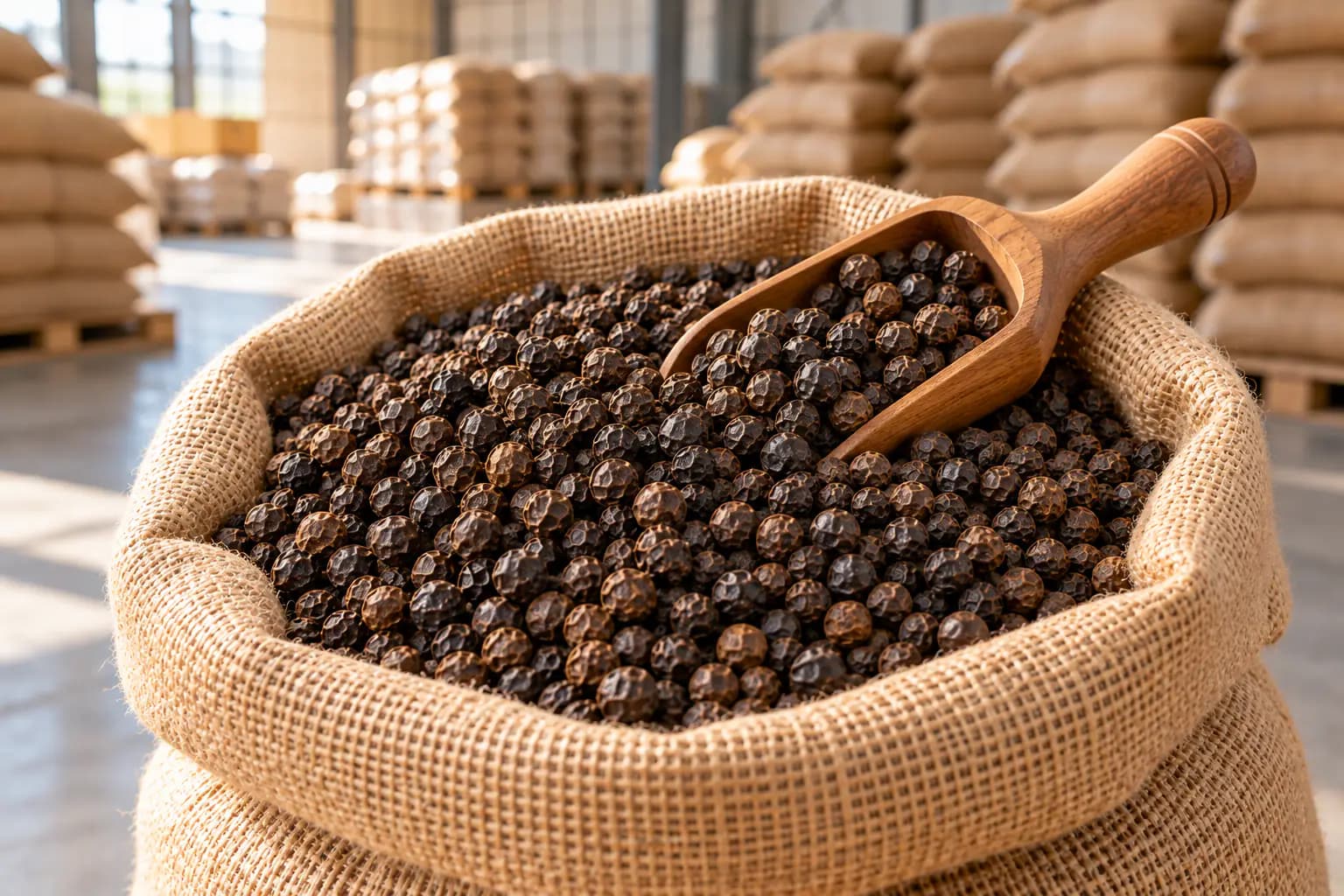
India grows and exports more spices than any other country, which is good news for buyers: there is a wide choice of suppliers, origins and grades. It also means quality varies a great deal from one exporter to the next. A good supplier makes importing easy, with consistent lots, clean lab reports and paperwork that clears customs first time. A poor one can cost you a container held at the port, a failed food-safety test or a product your customers reject.
This checklist is what experienced importers check before placing a first order. It works whether you are buying 250 kg of cardamom or full containers of black pepper.
1. Confirm they are a registered exporter
Every legitimate exporter in India has an Importer-Exporter Code (IEC) issued by the Directorate General of Foreign Trade. Food exporters also need an FSSAI food business licence, and exporters of spices must be registered with the Spices Board of India, the government body that regulates the spice trade.
Ask for the company's registered name, address and IEC, and check that the name matches the one that will appear on your invoice and shipping documents. A supplier who avoids this question is not one to send money to.
2. Ask exactly where the spices come from
Origin decides flavour, colour and price. Black pepper and green cardamom come mainly from Kerala and the Western Ghats, the best-known turmeric from Erode in Tamil Nadu, red chilli from Guntur in Andhra Pradesh, and cumin and fennel from Gujarat.
A reliable exporter can tell you the growing region of each product, and whether they buy directly from farmers and cooperatives or through traders. The shorter the chain, the easier it is to keep lots consistent and traceable.
3. Get a sample of the exact grade before you order
Never order a container on the strength of a photo. Ask for a sealed sample of the grade you intend to buy, not a generic "best quality" sample.
When it arrives, check aroma, colour, size and cleanliness, and keep part of it. Your first shipment should match this approved sample, and if it doesn't, the sample is your evidence.
4. Agree a written specification
"Bold cardamom" or "good quality pepper" means different things to different people. A professional exporter quotes against a written specification. Depending on the spice, that includes:
| Spice | What the specification should state |
|---|---|
| Black pepper | Grade (MG1, TGEB, TGSEB), bulk density (g/L), moisture, light berries |
| Green cardamom | Pod size (6–7 mm, 7–8 mm, 8 mm+), colour, litre weight |
| Red chilli | Variety (Sannam S4, Teja, Byadgi), stem-on or stemless, heat (SHU), colour (ASTA) |
| Turmeric | Origin, fingers or powder, curcumin %, polishing, moisture |
| Seeds (cumin, coriander, fennel) | Purity %, admixture, moisture, size |
If a supplier cannot put the specification in writing, they cannot be held to it.
5. Insist on a pre-shipment lab report
Food-safety rules for spices are strict, especially in the EU, the UK and the USA. Before each shipment, ask for a lab report from an accredited laboratory (in India, look for NABL accreditation) covering the tests your market requires. Typical tests include:
- Aflatoxin and ochratoxin (moulds, especially in chilli, pepper and nutmeg)
- Pesticide residues against your country's limits (the EU and UK limits are among the strictest)
- Ethylene oxide (ETO), which is banned in the EU
- Illegal dyes such as Sudan red in chilli and turmeric
- Microbiology (salmonella, total plate count) if the spice goes into ready-to-eat food
A good exporter will also accept testing by a lab or inspection agency you nominate.
6. Check they understand your import rules
Each market has its own rules: pesticide limits in the EU and UK, Arabic labelling for retail packs in the UAE and the Gulf, FDA requirements in the USA, and strict biosecurity checks in Australia and New Zealand.
Ask the supplier how they handle your country. You don't need them to be lawyers, but they should know which documents and tests your importer or customs broker will ask for. For example, see our guides for buyers in the UK and the UAE.
7. Ask for the full document set, in advance
Customs delays usually come from paperwork, not from the product. For each shipment you should receive:
- Commercial invoice and packing list
- Bill of lading (sea) or air waybill
- Certificate of origin
- Phytosanitary certificate, where your country requires one
- Certificate of analysis / lab report
Ask for draft copies before the goods ship, so your broker can check names, HS codes and weights while there is still time to fix mistakes.
8. Check packing, loading and shipping options
Spices lose aroma and pick up moisture if they are packed badly. Ask how each product is packed (PP or jute bags, vacuum bags, cartons, food-grade liners) and how the container is loaded.
Also confirm the commercial basics: minimum order quantity, whether you can share a container (LCL) or need a full one (FCL), the port of loading (for example Cochin, Chennai, Nhava Sheva or Mundra), and the delivery terms: FOB, CFR or CIF.
9. Get a clear quote and safe payment terms
A proper quotation lists the product, grade, quantity, packing, delivery terms, price and how long the price is valid. Spice prices move with every crop, so a validity date matters.
For a first order with a new supplier, avoid paying 100% in advance. Common safer options are a letter of credit (LC) at sight, or a partial advance with the balance paid against a copy of the bill of lading. As trust builds, terms usually become more flexible.
10. Judge their communication
How a supplier communicates before you buy is how they will communicate when something goes wrong. Look for quick, specific answers, one clear point of contact, written confirmations, and order updates you don't have to chase.
The best exporters make the whole process visible: you can see your quotes, prices, order status and documents in one place instead of searching through email and WhatsApp threads.
Red flags to watch for
- A price far below the market for the same grade
- No samples, or samples that don't match the quoted grade
- Refusing to share a lab report or to accept your own lab
- Vague grades with no written specification
- Pressure to pay 100% up front, or to pay a personal account
- No company name, address or registration details
- Only a mobile number or free email address, with no business contact
Quick checklist
| # | Check | Ask for |
|---|---|---|
| 1 | Registered exporter | IEC, company details, required registrations |
| 2 | Clear origin | Growing region, direct or via traders |
| 3 | Sample first | Sealed sample of the exact grade |
| 4 | Written specification | Grade, moisture, density, colour, heat |
| 5 | Lab report | Accredited lab, tests for your market |
| 6 | Knows your import rules | How they handle your country |
| 7 | Full documents | Drafts before shipping |
| 8 | Packing and shipping | Packing type, MOQ, FCL/LCL, Incoterm |
| 9 | Safe terms | Itemised quote, LC or part-advance |
| 10 | Good communication | One contact, written updates |
How Weorex Spices works
We are an export-focused spice supplier sourcing directly from growing regions in Kerala, Tamil Nadu, Andhra Pradesh and Gujarat, with our own drying unit and packaging line. Every buyer gets a free online dashboard: you request a quote for the exact grade, quantity and port, we post your price there, and you can accept it, ask for a re-quote, request a sample and follow your order through to delivery.
Browse the full range of spices, or talk to our export team about your specification.
Frequently asked questions
Do spice exporters in India need a special registration?
Yes. Besides the IEC that every exporter needs, food exporters need an FSSAI licence, and exporters of spices must be registered with the Spices Board of India.
What is a safe payment method for a first order?
A letter of credit at sight, or a partial advance with the balance against the bill of lading, protects both sides. Avoid paying the full amount up front to a supplier you haven't worked with.
How much sample should I ask for?
Enough to test properly: typically a few hundred grams per grade, sealed and labelled with the grade it represents.
Can I use my own lab to test the shipment?
A reliable exporter will agree to testing by a lab or inspection agency you nominate, usually at the buyer's cost, in addition to their own pre-shipment report.
Comments
Be the first to comment.
Leave a comment